Remembering 9/11

On September 12, 2011, in History, Reformed Theology, Society and Culture, by Bob Burridge

Remembering 9/11/2001 – Ten Years Later


Remembering 9/11

by Bob Burridge ©2011

There are times when evil shows itself so boldly that even those who know no Savior are horrified. On that September day in 2001 we were all reminded about the depth of human moral corruption. We saw the ugly side of the fallen human nature. We saw what any of us could be and would be, were it not for the restraining hand of our Creator who rules over all things, shaping them to reveal his nature and glory. It is God’s power, mercy and grace which alone keep individuals from falling into the depths of such pure depravity.

The tragedy of America’s 9/11 was not the only time in history when the pawns of wickedness took the lives of thousands, and destroyed the illusion of our temporal peace and prosperity. There was the slaying of the infants of Bethlehem by the paranoid pride of Herod when hearing of the birth of Christ, the new born King. Roman troops surrounded Jerusalem in 70 AD slaughtering over a million Jews in the siege of Jerusalem. These are but a few of the many sad glimpses at how the simple eating of forbidden fruit in Eden corrupted those made to display the glories of the Creator.

The message of hope is not found in our nation’s resolve, or in memorials to loved ones senselessly taken from us in a moment of repulsive horror. True hope is found in the hand of God that not only keeps us all from descending to the same depths of evil, but also sent the Savior to redeem from that fallen race some who would be adopted into the family of God. To love and redeem the good is wonderful. To do the same to the unworthy is astounding. Since there is no one who is truly good, considering the depth of our corruption, the work of our Savior amazes us and humbles us. We are driven to solemn worship of the Redeemer and King of all kings.

Romans 5:5-11, “Now hope does not disappoint, because the love of God has been poured out in our hearts by the Holy Spirit who was given to us. For when we were still without strength, in due time Christ died for the ungodly. For scarcely for a righteous man will one die; yet perhaps for a good man someone would even dare to die. But God demonstrates His own love toward us, in that while we were still sinners, Christ died for us. Much more then, having now been justified by His blood, we shall be saved from wrath through Him. For if when we were enemies we were reconciled to God through the death of His Son, much more, having been reconciled, we shall be saved by His life. And not only that, but we also rejoice in God through our Lord Jesus Christ, through whom we have now received the reconciliation.”

Tagged with:
 

What Happens When Someone Dies?

On August 10, 2011, in Bible Studies, Christian Living, Reformed Theology, by Bob Burridge

When people who trust in Jesus die, their soul goes immediately to be with their Savior. He paid the penalty of sin for his people. He died in their place. They will enjoy God’s blessings forever.

Basic Bible Teachings
Lesson 12: What Happens When Someone Dies?
by Bob Burridge ©2011


What Happens When Someone Dies?

Death is separation.

Most people think of death as the end of everything, but that’s not the main meaning of it in the Bible. When the body dies, the person’s soul is separated from it. The soul part of the person continues to be aware of what’s going on. It is still alive.

The book of Romans (chapter 6, verse 23) tells us that death is earned because of sin. It’s not just your own sins that earns that payment. When Adam sinned the whole human race was condemned to die.

There are two kinds of death in the Bible.

Physical Death is when the body stops working, and the soul is separated from it.
Spiritual Death is when a person is separated from fellowship with God.

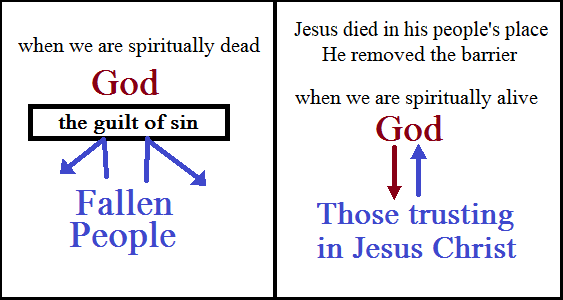
When we are born we are already spiritually dead because of the sin of Adam. He represented all of us in Eden. The guilt of Adam’s sin, and our own guilt when we sin, offends God. It becomes a barrier that keeps us from enjoying his comfort and promises. If we die when we are still dead spiritually, we cannot go to Heaven and be with God forever.

The Gospel is that good message that those who are changed by God have that barrier removed. The separation ends. The whole verse of Romans 6:23 tells us that death can be overcome.

Romans 6:23, “For the wages of sin is death, but the gift of God is eternal life in Christ Jesus our Lord.”

When people who trust in Jesus die, their soul goes immediately to be with their Savior. He paid the penalty of sin for his people. He died in their place. They will enjoy God’s blessings forever.

Resurrection is the rejoining of things separated in death.

When Jesus died on the cross, he was laid in a tomb. Three days later he was resurrected. His human body was changed and joined with his human soul again.

When the end of our world comes, Jesus will come again and the bodies of all his people will be resurrected too. Their bodies will be joined again with their souls in Heaven. They will live there forever with God and all the other believers. This is physical resurrection.

There is also a spiritual resurrection when the person separated from God is joined with him again. This is the Christian life we enjoy here on earth while we are still alive. Jesus removed the barrier of our guilt so that God enjoys our fellowship again, and we enjoy his blessings while we live here.

When we trust in Jesus as our Savior, we are raised up from spiritual death and are alive in a new way. Romans 6:4 explains that this is what our Baptism represents.

Romans 6:4, “Therefore we were buried with Him through baptism into death, that just as Christ was raised from the dead by the glory of the Father, even so we also should walk in newness of life.”

Those who are made alive by the Gospel should live as those who are made right with God again. Their lives should show how thankful they are for God’s love.

The sad part of this is that those who are not changed by faith in Jesus Christ are left in their spiritual death. They have no spiritual resurrection, so in the final day of judgment they will remain separated from God forever.

Those who are spiritually alive have the privilege of taking the Gospel to them. Some will show the love of God that makes them alive too. It is a wonderful thing to be used by God to bring life to those who are spiritually dead. When they trust in what Jesus did, God promises that they will be with him and all of us believers forever in glory.


(Bible verses are quoted from the New King James Version of the Bible)
previous lesson: We Neet to Help Other Believers
Index of all our lessons on Bible Basics

Tagged with:
 

The Way to Hope

On August 8, 2011, in Bible Studies, Christian Living, Reformed Theology, Romans, by Bob Burridge

True hope is not just wishful thinking. It brings a certainty about that for which we hope. There is no disappointment when we rest in the truthfulness of God’s promises.


The Way to Hope

Studies In Paul’s Letter to the Romans
by Bob Burridge ©2011

Lesson 17: Romans 5:1-5


Our world is filled with insecurity, uncertainty, and fear.

There are a lot of things people generally worry about. They wonder what calamities or accidents might be ahead for them. They know that sometimes they will become ill, will it be serious the next time? They sometimes wonder how long they have left to live, and how their lives will eventually come to an end. In a world where economies balance upon fragile markets and perceptions they wonder if the day will come when they will not be able to pay their bills and keep all their things. Some live in fear of embarrassment, or loneliness, or of crowded elevators.

It doesn’t help much when false hopes are offered in the infomercials and ads that promise quick fixes for all the little things in life that concern us. Misguided or intentionally misleading preachers promise things God never promised. They build up people’s hopes with irresponsible assurances, ask for money, and if things don’t work out they blame it on their victim’s own lack of faith.

So many experts, so many needs, so many claims to examine. Can we ever be sure we will not be disappointed? really 100% sure?

When people usually speak of having hope it doesn’t mean much. Hope has come to mean little more than a wish, a dream of things imagined. Empty promises are made, and with a pleading sigh people say, “Oh, I hope so!” Since they hope in fallible things, or in the promises of mere men who cannot deliver what they offer, deep inside they know that it is little more than a wish.

Most troubling is the dreaded feeling many have deep inside when they wonder if they will be accepted by God when they stands before him to be judged at the dawn of forever.

The Bible uses the word “hope” in a very different way. There, it is connected with the promise of God. The word “hope” appears 3 times in the short passage of Romans 5:1-5. The Greek word used there is elpis (ελπις). It means, “to anticipate with confidence, faith, trust”. Here it builds upon the solid foundation of the first four chapters and paves the way for a realistic optimism.


Paul begins Chapter Five by declaring that
believers have peace with God.

Romans 5:1, “Therefore, having been justified by faith, we have peace with God through our Lord Jesus Christ,

The first three chapters of Romans lay out the reason for our fears and insecurities. There is good cause for them. All have inherited the guilt of Adam because they were represented in him when he sinned. The spiritual death he brought upon himself was passed on to all of future humanity. By birth we are enemies of God.

Fallen man twists God’s truth into a religion that pretends that a person can control his own fate. However the Bible teaches that in his fallen estate there is no one who can do anything that is purely and truly good (Romans 3:12). As Jesus said of the unbeliever in John 3:36, “… the wrath of God abides on him.”

However, there is the good news. Paul tells us here that those enemies who come through Christ can have peace with God. The world seeks peace by hoping in vain to avoid bad things happening. The gospel tells us that there is a peace which is different from the empty hope the world imagines. Instead of promising deliverance from calamities, sickness, and adversity, the gospel promises a peace even in the midst of our troubles.

It is that peace of which the ancient prophets spoke. Jesus promised it in John 14:27, “Peace I leave with you, My peace I give to you; not as the world gives do I give to you. Let not your heart be troubled, neither let it be afraid.”

We have this peace when we are restored to fellowship with God by grace. This section starts with the connective, “therefore”. It builds upon all that Paul had been explaining up to this point. We are all unworthy and unable to do anything that is purely and truly good. There are no exemptions because of our nationality. Jews and Gentiles stand together as part of this fallen and condemned race. There are no ceremonies that have the power to deliver us independently of the promises of God’s covenant which has always pointed to the work of our Savior.

It is obvious that this peace cannot be found by keeping God’s law or by doing good deeds. These are unable to remove the existing guilt that separates us from our Creator. No one can do anything that can make him who is lost to become right with God.

Since the obedience and intentions of the sinner cannot help him, salvation can only be the work of God’s grace. Jesus paid the debt by his own suffering and death in place of his people. That salvation is applied to the sinner by the work of the Holy Spirit. In this deliverance the righteousness of Christ is given to the sinner, and the guilt of the sinner is placed upon Christ. When the sinner’s guilt is removed by grace, he is also given faith to confidently rest in the provision of Christ alone. By that graciously implanted faith he is declared to be justified. With the barrier of moral guilt removed, he is “reconciled” with God. The former enemy at war with God, becomes a child at “peace with God.” When men are at peace with God, a sense of true inner solace emerges.

So the gospel of Christ delivers from turmoil, uncertainty, and insecurity. We do not have peace by being delivered from bad circumstances. They are a part of living in this present world and age. We instead have a peace independent of our circumstances, a peace that passes our understanding.


By the gospel we have a gracious hope.

Romans 5:2, “through whom also we have access by faith into this grace in which we stand, and rejoice in hope of the glory of God.”

The peace we long for is not a vain dream or wish. It is not based upon the questionable promises of men, or in a vain hope that nothing can go wrong. It is a firm and certain confidence based upon the promise of God himself. This is the kind of hope spoken of in the Bible. It gives us a firm promise to stand upon.

This verse tells us that the hope we have is in “the glory of God.” In our natural state, “all have sinned and come short of the glory of God” (3:23) When we studied that passage we noted that the word for glory, “doxa” (δοξα), has several meanings. It speaks here of a glory that comes from God. In this kind of construction it most commonly means to approve of something.

Jesus said in John 12:43 when he spoke to the Pharisees, “for they loved the praise of men more than the praise of God.” The same word is used. The Pharisees received the “praise”, the approval (glory) of men, but they will not get the same from God. Here we find by grace, that we can stand firmly knowing that we have God’s approval. We appear in his sight not clothed in our own offensive garments, but clothed in the perfect righteousness of Jesus Christ our Redeemer.

This is why we rejoice triumphantly in that hope which we have in Christ. As the Reformer Martin Luther pondered this truth he wrote, “Where Christ is truly seen, there must needs be full and perfect joy in the Lord, with peace of conscience, which most certainly thus thinketh: Although I am a sinner, by the law, and under condemnation of the law, yet I despair not, I die not, because Christ liveth, who is both my righteousness and my everlasting life…” (Haldane on Romans 5:2 pg. 187 of his commentary).

The joy, hope, and peace that comes out of this graciously implanted faith is a distinguishing characteristic of the Christian. He rejoices even through situations he would not have expected he could survive.


This triumphant rejoicing extends also to our tribulations.

Romans 5:3, “And not only that, but we also glory in tribulations, knowing that tribulation produces perseverance;”

This peace is not tied to just good circumstances. No Scripture denies that bad times come, or tells us that they are not unpleasant. However, for the child of God trials have a good purpose, even when that purpose is not seen. Hebrews 12:11, “Now no chastening seems to be joyful for the present, but painful; nevertheless, afterward it yields the peaceable fruit of righteousness to those who have been trained by it.”

Paul wrote later in this same book, Romans 8:18, “For I consider that the sufferings of this present time are not worthy to be compared with the glory which shall be revealed in us.”

In the Beatitudes Jesus spoke of the blessedness of those who endure trials (Matthew 5:4,10-12).

This is the kind of joy and peace that strengthens us in hard times and trials. The confident hope we have in the love of the God who redeems us leaves no grounds for uncertainty or fear of judgment. While in prison and wrongly accused, The Apostle Paul said in Philippians 4:11, “Not that I speak in regard to need, for I have learned in whatever state I am, to be content”

As he wrote to the troubled Corinthians he said in 2 Corinthians 1:3-5, “Blessed be the God and Father of our Lord Jesus Christ, the Father of mercies and God of all comfort, who comforts us in all our tribulation, that we may be able to comfort those who are in any trouble, with the comfort with which we ourselves are comforted by God. For as the sufferings of Christ abound in us, so our consolation also abounds through Christ.”

Beyond our contentment and comfort in trials there is more promised here. The tribulations produce perseverance. James wrote about this in James 1:2-4, “My brethren, count it all joy when you fall into various trials, knowing that the testing of your faith produces patience. But let patience have its perfect work, that you may be perfect and complete, lacking nothing.”

When we confidently rest in what God has said by the faith Christ implants in us by grace, we learn that good will emerge to accomplish its greater ends, even when how it all fits together remains unseen.

Patience is hard to learn. We often have to wait for things we long for. We often fail at things and have to keep trying again and again to accomplish them. The good things we set about to do in our lives often take a long time to realize. We do not lack opportunities to practice patience. What we need to learn is that the source of growing in patience is that we better appreciate the promises and power of God. We need to grow in our confidence in the gospel, that which makes unworthy sinners into forgiven children by Christ. We learn to rest in the wisdom and love of an all powerful and all knowing God who loves his children dearly.


Verse 4 adds that this perseverance produces proven character and hope.

Romans 5:4, ” and perseverance, character; and character, hope.”

The first words are often translated as “proven character.” It means that virtue which is proven by trial. Dr. Haldane comments, “trial may detect a hypocrite as well as a manifest saint.”

It is when we persevere through trials that the power of the gospel is seen in us. The world sees that work of God which testifies to the truth of our message. We see it in ourselves, and become confident of God’s love, that he will not give up on us. It is not “perfection” that shows us that we are his. For in this life no one is perfect. It is this repeated coming in humble petition to Christ for help that evidences a living faith. James 1:12, “Blessed is the man who endures temptation; for when he has been approved, he will receive the crown of life which the Lord has promised to those who love Him.”

That proven character produces real hope. Our confidence grows as we find Christ’s power in us to bring us joy even through trials.

Fallen religion takes the evidences of being made right with God, and make them into causes of being made right with God. It teaches the error that man’s works, his obedience, his rituals, his innate goodness, or his sincerity become the confidence in which he stands before God.

In reality it is God’s undeserved grace alone that causes us to be made righteous in Christ. If truly redeemed, there will be these evidences: a confident faith in Christ alone for our righteousness, and a perseverance in pursuing the joy God has promised to his children.


Verse 5 concludes: this is a hope that does not disappoint us.

Romans 5:5, “Now hope does not disappoint, because the love of God has been poured out in our hearts by the Holy Spirit who was given to us.”

This hope will not fail us. It will not leave us abandoned before God to stand on our own. It is not like the vain hope of the world that rests upon uncertain things. That is just wishful thinking. It will instead bring with certainty that which is hoped for. It is not only a hope for blessings in the final judgment. It is there for us in life’s daily and special trials as well. There is no disappointment when we rest in the truthfulness and greatness of God.

The promises at the root of our hope flow from the love of God. That love is not simply seen by us at a distance. It is poured into our hearts. It is given in a flood of abundance. It comes by the Holy Spirit himself, who was given to us who are the redeemed in Christ.

When you face those trials, when patience is tried, when hope seems a mere dream: rather than living in denial, getting angry, hoping in vain things, or imagining how things could have been worse, turn instead to the heart of the gospel. Hope in the promise of God.

First we remove the fear that we have not done enough or lived holy enough. We are not made right with God by our attitudes, choices, or works. It is God’s grace that implants a simple faith in our hearts to find confidence in Christ alone.

Then we trust the promise of his continuing love as ministered by the Holy Spirit. That teaches us to find joy in knowing that we are approved in Christ by the Almighty God. That implanted life helps us through the trials. It shows us joy even in the midst of calamity. It comes by knowing the God who is Lord over all. It drives us to persevere, strengthening our character, and strengthening the hope that cannot fail.

Paul recorded an ascription of glory to God in Romans 15:13, “Now may the God of hope fill you with all joy and peace in believing, that you may abound in hope by the power of the Holy Spirit.”

(The Bible quotations in this article are from the New King James Version of the Bible unless otherwise noted.)

Back to the Index of Studies In Paul’s Letter to the Romans

Tagged with:
 

We Need to Help Other Believers

On August 3, 2011, in Christian Living, Means of Grace, Reformed Theology, by Bob Burridge

Matthew 18:15-17. “… if your brother sins against you, go and tell him his fault between you and him alone. If he hears you, you have gained your brother. But if he will not hear, take with you one or two more, that ‘by the mouth of two or three witnesses every word may be established.’ And if he refuses to hear them, tell it to the church. But if he refuses even to hear the church, let him be to you like a heathen and a tax collector.”

Basic Bible Teachings
Lesson 11: We Need to Help Other Believers
by Bob Burridge ©2011


We need to work together.

We need to help each other to live by what God says is right.
God calls us to be a family. Believers should look after one another just like brothers and sisters. We should pray for one another, and try to find ways to stir up others to live the way God says is right for his children. We are told in Hebrews 10:24, “And let us consider one another in order to stir up love and good works,”

We need to be good friends with other believers. We need to be good examples to one another too. When someone does a good thing, or lives the way God says we should, we should encourage him.

We should help other believers when they sin.
When someone does wrong things, Christian friends should encourage him to admit his sins and to change his ways. Go to the person kindly and in private to help him do what’s right. If the person does not listen to what you tell him, then you should get another friend to go to him with you. It is often good for the person you bring to be a Pastor or Elder from your church. They are specially able to help the person overcome his sin.

Jesus told us to help other believers this way in Matthew 18:15-16.

Matthew 18:15-16. “… if your brother sins against you, go and tell him his fault between you and him alone. If he hears you, you have gained your brother. But if he will not hear, take with you one or two more, that ‘by the mouth of two or three witnesses every word may be established.’ “

Sometimes when the person sinning is a Church member, and he still will not listen to you about his sin problem, the officers of the church may have to try to help them him. Be sure you go to the officers privately and with a kind heart. You don’t want to talk about the person’s sin with others because that would be gossip, and might hurt the person more than it helps him.

Jesus explained this in the next verse in Matthew 18. The officers will try to help the person overcome his sin. If he will not listen to the church leaders, they might tell him not to receive the Lord’s Supper until he is ready to change his ways, and admit to God that he has done wrong.

18:17, “And if he refuses to hear them, tell it to the church. But if he refuses even to hear the church, let him be to you like a heathen and a tax collector.”

When a member has to be removed from the church in this way, we still must treat him kindly. The difference is that he should then be treated as someone who needs the life changing work of Jesus Christ. We should continue to pray for him, and do all we can to encourage him to live in a way that honors God. Our goal is always to help the person back to where he is living in the way God says to live.


(Bible verses are quoted from the New King James Version of the Bible)
previous lesson: We Need to Worship
next lesson: What Happens When Someone Dies?
Index of all our lessons on Bible Basics

Tagged with:
 

Aware of Our Firm Foundation

On July 29, 2011, in Christian Living, Reformed Theology, Shorter Chatechism, by Bob Burridge

In his moral law, God shows us how to be better children in his family. It teaches us to see Grace at work in our otherwise disobedient hearts. It lights up the unseen opportunities that would otherwise be hidden in the dark. It teaches us what glorifies God, and how we enjoy living as his loved children.


Aware of Our Firm Foundation

(Westminster Shorter Catechism Questions 41-44)
by Bob Burridge ©2011


God’s creation is beautiful, vast, and amazingly complex.

Our Creator’s nature and glory are infinite and eternal. The immensity of his power and purpose is stamped upon everything he made. As Psalm 19:1-2 tells us, “The heavens declare the glory of God; And the firmament shows His handiwork. Day unto day utters speech, And night unto night reveals knowledge.”

We were created with the ability to observe and to be a part of that declaration of God’s glory. There is a lot to take in, so much to understand.

Knowing our limitations as finite creatures, God made to be able to group things together, and to sum up complicated ideas. Our ears take in sounds people make, and our brains are able to organize them into words that make us able to communicate. We can see marks people make on paper, then turn them back into sentences. We learn to recognize people from a quick glance at their facial features. We have learned how to teach and to remember the flow of history, the findings of science, and relationships in mathematics. We summarize what we learn with charts, diagrams, and generalized rules.

After long conversations people often have to ask, “What’s your point?” When we have read all the details in business contracts we often ask, “So what’s the bottom line?” Parents often teach simple rules to children like, “Don’t talk with strangers,” “Ask permission before you go somewhere,” “Bed time is at 9:00,” “Eat your vegetables.”

Without going into all the reasons behind them, simple rules help us. We need to simplify things to be able to make fast judgments and daily decisions.


God also summarizes the things he reveals
so we can remember and handle them better.

There are parts of the Bible that summarize the long history of God’s people. Our main duties and God’s grace are summarized in simple verses we can learn. His redemption is summarized in Ephesians 2:8-9, “For by grace you have been saved through faith, and that not of yourselves; it is the gift of God, not of works, lest anyone should boast.”

Our obligations to our Creator/Redeemer are summarized in Micah 6:8, “He has shown you, O man, what is good; And what does the LORD require of you But to do justly, To love mercy, And to walk humbly with your God?”

These summaries are not meant to be exhaustive. They are given to us to point out main principles to help us organize God’s truth and to remember what he teaches us.


It is reasonable to expect the moral principles God
built into His world would be summarized too.

Question 41 of the Westminster Shorter Catechism asks, “Wherein is the moral law summarily comprehended?”

Answer: “The moral law is summarily comprehended in the ten commandments.”

God made himself known by giving us his word in the Bible. His basic moral principles are summed up in the 10 Commandments.

When asked, Jesus summed up the moral law even more concisely in Matthew 22:37-40. There he gave us two general principles that sum up what is right: ” ‘You shall love the Lord your God with all your heart, with all your soul, and with all your mind.’ This is the first and great commandment. And the second is like it: ‘You shall love your neighbor as yourself.’ On these two commandments hang all the Law and the Prophets.”

The Answer to Question 42 of our Catechism quotes this comment by Jesus. It says,

“The sum of the ten commandments is, to love the Lord our God with all our heart, with all our soul, with all our strength, and with all our mind; and our neighbor as ourselves.”

The Bible regularly links love and obedience. We were created to live morally, doing the things that show respect to our Creator. When we live that way, intent on truly honoring God and helping the people around us, we are being loving and therefore are keeping his commandments inwardly as well as outwardly.

Love for God and others is expressed by keeping his moral commandments. In the commandments God defines what things are loving.

This connection was made by Jesus many times in his ministry. For example, the Gospel of John records some of his direct comments about this.

John 14:21, “He who has My commandments and keeps them, it is he who loves Me…”
John 15:12, “This is My commandment, that you love one another as I have loved you.”
John 15:14, “You are My friends if you do whatever I command you.”
John 15:17, “These things I command you, that you love one another.”

Then in 1 John 5:2-3 the Bible says, “By this we know that we love the children of God, when we love God and keep His commandments. For this is the love of God, that we keep His commandments. And His commandments are not burdensome.”

Love does not mean much if we do not show it by our attitudes, thoughts, and actions. John 13:35 says, “By this all will know that you are My disciples, if you have love for one another.”

God’s summation of his moral principles help us remember and obey what honors him. It is how we fulfill what we were created and commissioned to be. It is how we love. It is what real “love” looks like.

This summation by Jesus fits exactly with the order of the Commandments God gave through Moses.


The Ten Commandments divide into these two main sections.

The first section is about our loving God above everything else. When Jesus said, “You shall love the Lord your God with all your heart, with all your soul, and with all your mind.” he was quoting from the words of Moses in Deuteronomy 6:5.

This sums up the first 4 commandments. It is always wrong to worship other gods, to make images of God who is pure spirit, to use God’s name without respect, or to forget honoring the Creator’s work on the Sabbath. These first 4 Commandments show us who God is, and how we should worship and live for him.

As the second great commandment, Jesus said, “You shall love your neighbor as yourself.” Again he was quoting the words of Moses, this time from Leviticus 19:18. We must love our neighbor as we already look out for ourselves.

This sums up the last 6 Commandments. It is never right to show disrespect to those God puts in authority over us, or to murder. No one should be unfaithful in marriage, steal, lie, or covet. These last 6 Commandments show how God designed us to live together.

Moral law is the way things ought to be in a place created by the one True God. They show that we submit to his lordship as our Creator and King, and they teach us how to live lovingly with those God puts around us in our lives.


God’s moral principles are not just baseless rules.
They are founded upon the fact of God.

God introduced his commandments through Moses by explaining his right to issue commandments. Question 43 of the Catechism asks, “What is the preface to the ten commandments?”

The answer simply quotes from Deuteronomy 5:6. This verse leads into the giving of the Ten Commandments. It says, “I am the Lord your God who brought you out of the land of Egypt, out of the house of bondage.”

The preface leads into these moral principles by laying out the foundation for them. Israel was a defeated nation of oppressed slaves in Egypt. There was no hope for them by any efforts they could make on their own. Since God delivered her, and gave her back her nationhood, he alone had the right to say how she should live as a nation.

However, there was more. God was the Creator. He made all things for his own glory, so he alone knew what would honor that glory in a moral way. He also made the promise of a Redeemer, a Messiah who would die for the guilt of his people. Since all deserve eternal bondage to sin and unending separation from their Creator, only he could describe what freedom from sin and fellowship with God would be like.

Just as Israel owed her life to God alone, we all owe ours to him also. He created us to promote his glory, and redeemed us to be his children forever, therefore only he has the right to say what he made and redeemed us to be. That lays out the preface and foundation to this summation of God’s Moral Law.

When I worked in a commercial laundry the employees often complained. We worked hard under rough conditions. They would see the managers in air-conditioned offices and often asked, “who do they think they are to tell us how to do our job?” But, they owed their jobs to the owners and managers. It was what went on in that office that enabled them to earn their living.

Similarly, we owe our lives and salvation to God alone. He is the only one who has the right to describe our purpose and what is right.

In Romans 9:20 Paul put it this way, “But indeed, O man, who are you to reply against God? Will the thing formed say to him who formed it, ‘Why have you made me like this?’ ”

Catechism question 44 explains the reason for this preface to the Commandments. It says,

Answer. “The preface to the ten commandments teacheth us, that because God is the Lord, and our God and Redeemer, therefore we are bound to keep all his commandments.”

That is how important these commandments are. They were not first given to Israel. They were summarized for Israel. Every moral law in them goes back to creation itself. They show us how we can show our love for our Creator, our Redeemer.


Do you say you love Jesus Christ dearly?

Do you do what he says and live morally as God describes it for you? That is what it is to love God. Do you treat those you meet and work with the way our Creator says you should? That is what loving your neighbor is about.

Satan is subtle and knows how to play to our imperfect nature. He will suggest that such moral ideas have exceptions, and do not always apply. Like Israel in the wilderness we are easily persuaded to set these principles aside, and to take on the standards people accept in our fallen culture.

Since God created us, gives us life day by day, redeemed us, and blesses us, he alone has the absolute right to tell us how he made us to live.

It is not only unwise, but evil, to fail to see this important foundation to all that is right. We need to read these Ten Commandments with the prayerful intent of conforming our lives to them.

In each one, as we peel away the deceptions that hide the moral principle behind it, we see how short we fall in bringing glory to our God. We also see how much our Savior suffered as he took on our guilt. We see a loving light shining on an otherwise dark and confusing path.

God shows us how to be better children in his family. These summary principles teach us to see Grace at work in our otherwise disobedient hearts. They are not laws by which we merit salvation or blessings. We imperfect creatures could never keep them without God’s Redeeming Grace. They light up the unseen opportunities that would otherwise be hidden in the dark. They teach us what glorifies God, and how we enjoy living as his loved children.

(The Bible quotations in this lesson are from the New King James Version of the Bible unless otherwise noted.)

Tagged with:
 

Profitable Obedience

On July 22, 2011, in Bible Studies, Christian Living, Reformed Theology, Shorter Chatechism, by Bob Burridge

We who love the Lord know we are saved by grace alone, not by our obedience. Our desire in response is to honor our Creator and Redeemer, and to enjoy doing so forever. Our great passion is to hunger to know what God says is right and good.


Profitable Obedience

(Westminster Shorter Catechism Q: 39-40)
by Bob Burridge ©2011


Even before sin came into human hearts,
we had a purpose.

God created us to live for his glory and to enjoy doing so forever. That’s how our Westminster Shorter Catechism begins.

Sin did not change that purpose, but it separated us all from fellowship with God. It made us unable to be all we were made to be. In our frustrating fallen condition we cannot do anything truly good in the eyes of God, therefore we lost all hope of true joy forever.

For us to fulfill that purpose again, God sent the Messiah to redeem and to restore his people. This redemption is purely by grace. It clothes the unworthy with perfect righteousness, and enables them to joyfully glorify God.

The Westminster Shorter Catechism tells us what the Bible principally teaches. In Question 3 it organizes it all into two major categories. It asks, “What do the Scriptures principally teach?” The profound answer is, “The Scriptures principally teach what man is to believe concerning God, and what duty God requires of man.”

These are the main things God tells us about in his word. What we believe about God and about who we really are effects how we put things into practice in our everyday lives. Belief and duty need to stay together. They can never really ever be separated. You have to know what to do, and you must put into practice what you know.

The first part of the Catechism, questions 4-38, are about what we ought to believe concerning God. This next section is about how we go about the duties he gives us to do.


God requires us to obey his revealed will.

Question 39 introduces this next part of the Catechism. It asks, “What is the duty which God requireth of man?” This is the answer:

“The duty which God requireth of man is obedience to his revealed will.”

We often hear people worry about being “out of the will of God”. They fret over every decision and circumstance thinking they might mess up God’s plan. The confusing part is that God does not tell us all that he planed to do. Deuteronomy 29:29 tells us that much of God’s plan is kept secret from us. It says, “The secret things belong to the Lord our God, but those things which are revealed belong to us and to our children forever, that we may do all the words of this law.”

We cannot know how all things work together to fulfill his purposes. However, his word does tell us to focus on the things he has made known. That is our duty.

God’s decrees are unchangeable. Nobody can ever make a choice or do anything that makes God deviate from his eternal plan. Nothing can frustrate that eternal will of God.

This the consistent teaching all through Scripture. It could not be more clear.

Job 42:2 “I know that You can do everything, And that no purpose of Yours can be withheld from You.

Psalm 115:3 “But our God is in heaven; He does whatever He pleases.”

Psalm 135:6 “Whatever the Lord pleases He does, In heaven and in earth, In the seas and in all deep places.”

Even the wicked things people do are part of how his plan works out. It does not excuse their evil, but evil cannot operate independently from God’s decrees.

When Joseph’s brothers conspired to kill him and to sell him into slavery, Genesis 45:7-8 says, “And God sent me before you to preserve a posterity for you in the earth, and to save your lives by a great deliverance. So now it was not you who sent me here, but God; and He has made me a father to Pharaoh, and lord of all his house, and a ruler throughout all the land of Egypt.”

In Genesis 50:20 Joseph explained this to his wicked brothers. He said, “But as for you, you meant evil against me; but God meant it for good, in order to bring it about as it is this day, to save many people alive.”

This is not an isolated text. It is the pervasive center of all Scripture. Psalm 76:10 says, “Surely the wrath of man shall praise You; With the remainder of wrath You shall gird Yourself.”

God employs men’s sins for his ultimate glory. However, sin is never condoned, and remains contrary to the moral principles God reveals.

The things he calls us to do are the things we need to be concerned about:. He reveals what is right for us to do. When that is violated, it is called “sin.” While we can never change God’s eternal plan, his decreed will. We can and do at times violate this revealed will of God.

In 2 Timothy 3:16-17 Paul reminded Timothy how we know God’s will for our lives: “All Scripture is given by inspiration of God, and is profitable for doctrine, for reproof, for correction, for instruction in righteousness, that the man of God may be complete, thoroughly equipped for every good work.”

This means that all of the Bible is God’s word, and therefore is profitable for these 4 duties:

1. It is profitable for teaching: It offers us a complete curriculum of all God wants us to know. There he tells us about himself and about how everything else relates to him.

Psalm 119 illustrates how God’s word is our teacher. Verse 24 says, “Your testimonies also are my delight And my counselors.” Verses 98-99 say, “You, through Your commandments, make me wiser than my enemies; For they are ever with me. I have more understanding than all my teachers, For Your testimonies are my meditation.”

2. It is profitable for reproof: The Bible warns about errors and shows us the truth which exposes them. There is no other standard against which what we learn can be compared.

Psalm 119:21 says, “You rebuke the proud — the cursed, Who stray from Your commandments.”

3. It is profitable for correction: Once error is exposed, the proper path needs to be found. Only the Bible as God’s word can show a person that right path.

This is also well summarized throughout Psalm 119.

9 “How can a young man cleanse his way? By taking heed according to Your word.”
11 “Your word I have hidden in my heart, That I might not sin against You.”
30 “I have chosen the way of truth; Your judgments I have laid before me.”
105 “Your word is a lamp to my feet And a light to my path.”

4. It is profitable for training in righteousness: Righteousness is when we live according to the things that please God. Deuteronomy 6:25 defines righteousness as obedience to God’s revealed will. It says, “Then it will be righteousness for us, if we are careful to observe all these commandments before the LORD our God, as He has commanded us.”

Biblically, righteousness means innocence before God’s law. There is no other standard than God’s own word for knowing what pleases him.

Again we turn to Psalm 119:

40 “Behold, I long for Your precepts; Revive me in Your righteousness.”
116 “Uphold me according to Your word, that I may live; And do not let me be ashamed of my hope.”
117 “Hold me up, and I shall be safe, And I shall observe Your statutes continually.”
142 “Your righteousness is an everlasting righteousness, And Your law is truth.”
160 “The entirety of Your word is truth, And every one of Your righteous judgments endures forever.”

This pastoral advice to Timothy points out these four ways God’s word is profitable. God’s revealed will enables his people to be complete and thoroughly equipped for every good work.

The Bible is a book of content. It is not just interesting reading material. We need to learn and then to do what it says in order to live in a way that pleases our Redeemer. This is the only way to enjoy fulfilling what we were made to be.


The standard for our obedience is the moral law of God.

Question 40 of our Shorter Catechism says,

“The rule which God at first revealed to man, for his obedience, was the moral law.”

It is one thing to say we should live morally, obeying what God says is right and what truly satisfies our real needs. It is quite another thing to know which attitudes and behaviors are really moral.

There are many different views about morality. Some things are universally accepted as right and wrong. God built into our nature an awareness that it is evil to commit murder, and to steal. Most agree that it is wrong to be unfaithful in marriage, to be greedy, and to lie. Most agree that it is good to help others in need, to worship, and to be kind to others. However, there is a lot of confusion about when some of these things are binding upon us. There are many views about how worship should be done, and when ambition becomes greed.

To clear up the confusion in our fallen nature God gave us his written word. The Bible tells us what is good and acceptable in the eyes of God. These principles are called God’s moral law. This is not a set of baseless rules made up for us as tests, or for earning our way to heaven. Moral law is the way things must be in a universe created by the one True God.

It is always wrong to worship other gods, to make physical images of God who is spirit, to use God’s name without respect, or to forget honoring the Creator on the Creation Sabbath. It is never right to show disrespect to those God puts in authority over us, or to murder. No one should be unfaithful in marriage, steal, lie, or covet.

The Ten Commandments were not just laws for Israel.
Not one of them was made up in the time of Moses. They all go back to creation itself. They are a summation of these ethical principles that can never be annulled. The first four tell us about how the Creator should be worshiped. The last six tell us how we should live together as his creatures designed to live for his glory.

In our era, even some churches teach that not all of God’s revealed moral principles apply today. They explain away one after another of these universal standards, making excuses or loop holes to justify violating what remains.

That is exactly what many of the people of Israel did in the time of the prophets. It is what the Pharisees were doing in the time of Jesus and the Apostles. It is what corrupt churches have done since the time the Bible was completed.

Some are quick to point out that Jesus fulfilled all of God’s law. This is certainly true. But we need to let Scripture alone tell us what it means to fulfill the law.

It certainly does not mean that he eliminated any of these moral principles. Jesus made an important contrast in Matthew 5:17-18, “Do not think that I came to destroy the Law or the Prophets. I did not come to destroy but to fulfill. For assuredly, I say to you, till heaven and earth pass away, one jot or one tittle will by no means pass from the law till all is fulfilled.

The word translated “to fulfill” is “plaero-o” (πληροω) which means to make something complete. Jesus makes it clear in verse 17 that this does not mean he destroyed the law.

The ceremonial laws of the Old Testament given in the time of Moses were completed in Christ. He fulfilled what they were teaching. They showed in advance that God would send a substitute to pay for the sins of his people. To continue the sacrifices, washings, and dietary rituals, the priestly system, or the added ceremonial Sabbaths, would be to deny that they all pointed to Jesus Christ as the final sacrifice, as our High Priest, as our only washing from sin and clothing of righteousness. He did not end the principles taught in these ceremonies. He brought them to completeness and satisfied their demands for us.

Jesus also fulfilled the moral law for us. He paid the penalty demanded by eternal justice for us. We deserve death for violating the Creator’s moral principles. Jesus suffered and died in place of those who come to him trusting in his Atonement.

He also perfectly kept the moral law in our place, fulfilling all its demands as our representative. The legal benefits of his obedience are credited to us. We are clothed in his Righteousness. By his completed work he brings believers back into fellowship with God. This makes them able to do things that are truly good. He breaks the chains of sin so that it is no longer our master or motive. This moves us to want to honor our Creator out of gratitude. Jesus never made it acceptable to dishonor God’s name, break the Creation Sabbath, murder, steal, or lie. Only unbelief or dispensational extremism could eliminate any one of the moral laws of God.

Jesus and the Apostles often spoke of God’s moral principles as still binding. For example, in Romans 7:7 Paul said, “I would not have known sin except through the Law”

We who love the Lord know we are saved by grace alone, not by our obedience. Our desire in response is to honor our Creator and Redeemer, and to enjoy doing so forever. Our great passion is to hunger to know what God says is right and good. We prayerfully work to do those things, and to say “no” to thoughts and actions that offend him.

(The Bible quotations in this lesson are from the New King James Version of the Bible unless otherwise noted.)

Tagged with:
 

What can we do to be stronger Christians?

On July 6, 2011, in Bible Studies, Christian Living, Means of Grace, Reformed Theology, by Bob Burridge

To grow as better Christians there are things we should do too. God’s power and blessing is what makes us grow, but he tells us to obey him, and to make use of the tools that he promises will make us stronger spiritually. We call these the “means of grace.”

Basic Bible Teachings
Lesson 7: What can we do to be stronger Christians?
by Bob Burridge ©2011


What can we do to be stronger Christians?

To have stronger and healthier bodies we need to eat foods that are good for us, get enough exercise, get enough sleep, and take our medicines when we get sick.

To grow as better Christians there are things we should do too. God’s power and blessing is what makes us grow, but he tells us to obey him, and to make use of the tools that he promises will make us stronger spiritually. We call these the “means of grace.”

1. We need to learn God’s Word.
God’s word tells us what is true, and what things are right to do. When we read and study the Bible, God uses it to make us more like our Savior, Jesus Christ. We should read our Bibles every day. On Sundays, we need to pay close attention during the sermons and lessons at Church. We should listen carefully when we do our Bible study times together as a family.

2. We need to talk with God in Prayer.
God tells us we should come to him in prayer. We should tell him how wonderful he is as our Creator and as our Savior who died to forgives us for our sins. We should thank him for his many blessings. We should admit our sins to him, and ask him to help us not do things that offend him. We should bring our needs to him, both our own needs and those of others we know. We can pray any time from anywhere. A healthy Christian should pray throughout the day.

3. We need to take part in worship, specially the Sacraments.
When we go to Church to worship, we should pay attention to every part of the service. Worship is a very important exercise to keep us spirutally healthy. When we learn more about the church and understand the Lord’s Supper we should go to the leaders of the church and ask them to let us join with the congregation in receiving the bread and wine during Communion. God promises to help us grow spiritually when we receive the sacraments in the right way.

4. We need to help each other to live by what God says is right.
we do wrong things, our Christian friends encourage us to admit our sins and to change our ways. When we do right, we should encourage one another too. Sometimes when Church members will not admit their sins or will not make things right again, the officers of the church may correct them. They might even tell them not to receive the Lord’s Supper until they are ready to change their ways and admit they have done wrong.

These are ways God works in our lives to help us to grow as Christians. They make us stronger. In our next studies we will look more closely at each of these means of grace.


(Bible verses are quoted from the New King James Version of the Bible)
previous lesson: How do we become one of God’s people?
next lesson: We Need To Learn God’s Word
Index of all our lessons on Bible Basics

Tagged with:
 

No Exceptions

On April 27, 2011, in Bible Studies, Reformed Theology, by Bob Burridge

Since salvation is totally a work of grace, and since it is entirely granted by an all sovereign and all powerful God, there can be no uncertainty about our salvation when we truly believe in Christ’s work as our only hope.


No Exceptions

by Bob Burridge ©2011

Humans were created without an inclination to do evil. Adam and Eve were holy and free. Their freedom didn’t mean that God had no plan or idea what would happen. Their Creator was not open for suggestions about an uncertain future which in any way was dependent upon them. Eden was not a cosmic moral experiment. God is sovereign eternally. By “free” we mean that man had no built in pull toward evil. He had the moral ability both to do good and to sin.


In the fall, all humans lost that freedom and
became corrupted, inclined toward evil.

Romans 3:23, “For all have sinned and fall short of the glory of God”

At that moment in Eden, when Adam represented us all in the first sin, humanity became depraved. Sin brought death and bondage. There was no more ability to do good. The chains of corruption were firmly fixed upon us all. Fallen humans were cut off from the Creator, the source of truth and life. Paul wrote in Ephesians 2:1 saying that we were all, “… dead in trespasses and sins”

Sin alienates us all from God. The guilt that comes from it deserves eternal judgment, eternal separation from the Creator. Romans 6:23 says, “the wages of sin is death.”

This corruption, or “depravity”, is inherited by all humans. In Romans 5:12 Paul wrote, “Therefore, just as through one man sin entered the world, and death through sin, and thus death spread to all men, because all sinned.”


Just how seriously damaged are we from our inherited corruption?

We say this depravity is “total” because every part of the person is involved. Fallen humans are unable to do any spiritual good. Humans are corrupted to the core of their soul. Jeremiah 17:9 says, “The heart is deceitful above all things, And desperately wicked; Who can know it?”

The Bible says in Ecclesiastes 7:20, “For there is not a just man on earth who does good  And does not sin.” The Apostle Paul references that verse, and quotes from Psalm 14:1-3 in his letter to the Romans. There he tells how complete our depravity is from the time of our conception. The classic passage of Romans 3:10-12 says, “As it is written: ’There is none righteous, no, not one; There is none who understands; There is none who seeks after God. They have all turned aside; They have together become unprofitable; There is none who does good, no, not one.’ ”

No one, aside from God’s grace, has the ability either to believe or to repent. Jesus said in John 6:44, “No one can come to Me unless the Father who sent Me draws him; and I will raise him up at the last day.” In 1 Corinthians 2:14 the Apostle Paul wrote, “But the natural man does not receive the things of the Spirit of God, for they are foolishness to him; nor can he know them, because they are spiritually discerned.”

No one can change his own basic nature. To do that he would have to go against what he already is. He can’t even understand the real problem, much less understand and trust in the solution. As far back as the time of the prophets, Jeremiah 13:23 said, “Can the Ethiopian change his skin or the leopard its spots? Then may you also do good who are accustomed to do evil.”

Fallen humans hate the fact that they need God’s grace in order to do what is truly good. Once confronted with this biblical teaching, it either converts them, or condemns them. Those not renewed by a supernatural work of the Holy Spirit will be offended. They will refuse to admit their lost condition. Their negative response further exposes the corruption they are so quick to deny.


The denial of man’s total depravity is at the root
of all non-christian thought and values.

The philosopher Rousseau proposed the idea of the “Noble Savage”. He was born in Calvin’s Geneva in 1712 (about 200 years after John Calvin). Rousseau came to hate the principles of God which were revealed in Scripture. Instead of total depravity, he taught the natural goodness of humanity. To him civilization was a mistake. It gets in our way. He thought that if we could just get rid of rules and cultural traditions, we would see mankind at his best.

The Frenchman Robespierre believed strongly in the teachings of Rousseau. He believed that man will prove his natural goodness if he was only allowed to be really free. He believed this theory could liberate the people of France.

He and his followers finally came to power. He had his opportunity to put his beliefs into practice. We call this period of France’s history the “Reign of Terror”. It lasted for a little over a year beginning in 1793. When it was over more than 20,000 Frenchmen had been killed in a horrible blood-bath by the “good men” of Robespierre. Included among those massacred were many clergymen who dared to doubt that man was naturally good.

How did he justify his use of terrorism and violence in proving that humanity is basically good? He explained it this way, “We must annihilate the enemies of the republic at home and abroad, or else we shall perish… in time of revolution a democratic government must rely on virtue and terror… Terror is nothing but justice; swift, severe and inflexible; it is an emanation of virtue …”

A couple generations later there was the French artist Gauguin. He also believed in Rousseau’s idea that man is basically good. He left civilization to live with the “Noble Savage” in Tahiti. The Tahitians lived without civil laws and restrictions. He was certain he would find an ideal society where there was unhindered human kindness and goodness. However, Gauguin was disillusioned with what he found in Tahiti. After painting a Tahitian scene, showing that what he found was not noble, he committed suicide.

History confirms what God reveals about man in the Bible. Humans are all fallen creature. We are totally depraved and live under the shadow of eternal damnation.

These are hard teachings. Jesus admitted this to the disciples in John 6. Some had stopped following him because of his teachings. In John 6:60 it says, “Therefore many of His disciples, when they heard this, said, ‘This is a hard saying; who can understand it?’ ”

So Jesus repeated that same thing he had said earlier in verse 44. In John 6:65 Jesus said, “… Therefore I have said to you that no one can come to Me unless it has been granted to him by My Father.”


Our total depravity provides the barrier
that reveals the power of God’s grace.

In contrast with our being dead in sin, Paul said in Ephesians 2:4-5, “But God, who is rich in mercy, because of His great love with which He loved us, even when we were dead in trespasses, made us alive together with Christ (by grace you have been saved)”

Since salvation is totally a work of grace, and since it is entirely granted by an all sovereign and all powerful God, there can be no uncertainty about our salvation when we truly believe in Christ’s work as our only hope. Our confidence is never dependent upon our works or knowledge. The price demanded by our offenses against God was fully paid for on the cross of Calvary long ago by Jesus.

(The Bible quotations in this article are from the New King James Version unless otherwise noted.)

Tagged with:
 

An Offer That Can’t Be Refused

On April 8, 2011, in Bible Studies, Reformed Theology, by Bob Burridge

Ephesians 2:8-9 are classic verses that explain God’s grace as the cause of our salvation. “For by grace are ye saved through faith; and that not of yourselves: It is the gift of God. Not of works, lest any man should boast.”


An Offer That Can’t Be Refused

a study in Ephesians 2:8-9
by Bob Burridge ©2011

People generally like to be commended for the good things they do. We live in a rewards based culture where praises and prizes are lavished upon the best movies, the best songs, the best dressed, the most likely to succeed, the fastest, the most popular, and the first to set some record.

When “good” is measured by popularity or majority preferences it’s easy for those to be good who we see meeting those standards. A good singer is one who gets the most votes on “American Idol”, sells the most music tracks, or charges the most for seats at concerts.

Good can easily become very subjective and divorced from any absolute standard to which we are all to conform. Moral good becomes giving to the poor, helping the handicapped, contributing to hospitals, or being kind to our neighbors. While these certainly can be good things, they can also be manipulative and self-serving if done with the wrong motives.

It’s generally agreed that we should do good things in life. It’s not as easy to define what things are really “good” by these mere appearance based standards. Even those who do what they admit is “bad” do it for some result they think is “good” by whatever standard they use for measuring things morally. A thief might think it’s good when he gets away with a robbery because he gets money.

People often believe that what they are doing is truly good. They even believe that the good they do is a great personal accomplishment. Individuals want to take credit for the things they do which they think are good. The problem is that in our fallen estate, the effects of our inherited sin nature distort our ability to see things as they really are. This disables us from understanding spiritual truths and from doing good as God sees it.

Even religion is distorted to where mere belief in some kind of God is thought to be a good thing. Religion is promoted where God has to wait for us to allow him to do good in our lives, and where we get the credit for doing it. The Bible is very clear that in our fallen condition, we can’t do any good thing. Our motives are stained with sin, and are not focused on giving God the glory he deserves.

Romans 3:10-12, “As it is written: “There is none righteous, no, not one; There is none who understands; There is none who seeks after God. They have all turned aside; They have together become unprofitable; There is none who does good, no, not one.”

The greatest good is for us to fulfill the purpose for which we were created. We are here to honor our Creator, to promote his glory and to enjoy his blessings responsibly and thankfully.

The greatest good thing we can do is to be reconciled with our Creator by the grace that sent Jesus as the Messiah. Even that is a work of God, not of our own fallen nature.

Ephesians 2:8-9 are classic verses that explain God’s grace as the cause of our salvation.

“For by grace are ye saved through faith; and that not of yourselves: It is the gift of God. Not of works, lest any man should boast.”

All people are challenged by the gospel to repent of sin, believe in Christ as Savior, and to do good. However, they can’t respond in these truly good ways because of their total inability to do what is really good in God’s sight.

The outward call of the gospel sometimes comes to those not enabled to believe. They will refuse God’s salvation because they aren’t able to understand it properly or to trust in it sincerely.

There is also God’s inward call described in the Bible. This is the call of the Holy Spirit which applies the work of Christ and regenerates the soul. This can’t be resisted because it inclines the heart to irresistibly come to Christ. It makes the redeemed grieve for their sins and repent. It makes them trust in the work of Jesus Christ alone as the way of forgiveness and salvation. and it makes them begin the process of sanctification, of growing in obedience to God. It is this offer, where the soul is transformed, that is an offer that can’t be refused.

Ephesians 2:8-9 makes this very clear. Being saved from our lost condition is by God’s grace through faith.

Grace is the undeserved favor of God to redeem the unworthy. That is the cause of salvation. It is that “by which” we are saved from our lost condition of separation from fellowship with the God who made us. The foundation of that grace toward the lost is the work of Jesus Christ who satisfied justice in the place of those he loved from all eternity. Earlier in this same Epistle (Ephesians 1:3-7) this foundation was laid out very clearly.

Faith is the means God uses by which grace works in the heart. He puts that certain knowledge, that trust, in our hearts which causes us to rely upon the gospel promise as our only hope. This work in us is done “by grace” but “through faith.” In our lost condition we are not able to trust what is true, or even to know what really is true. A true faith in God’s promises is impossible until the work of grace has already changed the lost heart to give it life.

Faith and the good works that flow from conversion to Christ are never initiated by us independently from God. They are God’s gifts. Until God gives that gift, there will be no true repentance, faith, or obedience.

When we come to Christ there is nothing to brag about. It is not our work, it is God’s work entirely. Even our faith is God’s gift. To put faith first and grace second turns this verse around. Faith is never the action of a fallen heart that then causes or allows God to work by grace. If grace is earned or deserved by us, it is not grace.

This is a very good message. Our salvation does not depend upon our doing enough, or of our doing something in the exact right way. There is no test or minimal standard for God’s work in saving us. It is by his love, not by our permission and human wisdom, that we are transformed into children of God.

What’s more, if we never deserved it to begin with, we can do nothing to lose it once we really have it. God’s forgiveness and perseverance with his children is our eternal hope and encouragement through all our stumbles and failures. We imperfect creatures, redeemed by grace through faith, are secure in the hands of our Sovereign God.

(Note: The Bible quotations in this article are from the New King James Bible unless otherwise noted.)

Tagged with:
 

How We are Made Right with God

On December 29, 2010, in Bible Studies, by Bob Burridge

1 Peter 3:18, “For Christ also suffered once for sins, the just for the unjust, that He might bring us to God, being put to death in the flesh but made alive by the Spirit”


How We are Made Right with God

by Bob Burridge ©2010

The good news of the gospel isn’t anchored in our own efforts or feelings. It’s anchored in the work of Christ in fulfillment of God’s promise.

The person who needs to hear about Christ needs to be taken beyond his sorrow for sinning. If we just scare him with the fires of hell we drive him to whatever he believes is the escape. Often that’s not to the true deliverance they can have in Christ.

The statistics of emotionally charged revival campaigns are not very encouraging. The large majority of those who allege to come to Christ under those conditions show no change in their lives. After a few weeks they are never heard from again by the churches.

We need to point them to the work the Savior did, not to an emotional leap in the dark. They may come to God for mercy, but mercy comes only through Christ. Cries for mercy based on anything else are not the way to salvation.

First we need to be sure they understand the atonement. They may not know the word. You may not know the full theological definition of it yourself. But you need to lead them to the truth of it.

1 Peter 3:18, “For Christ also suffered once for sins, the just for the unjust, that He might bring us to God, being put to death in the flesh but made alive by the Spirit”

The Demands of Justice
This verse begins with these words, “For Christ also hath once suffered for sins, the just for the unjust, …”

We humans are all unjust. We are sinners who stand accused before God. We are law-breakers.

As we see in Romans 3:23, “… all have sinned, and come short of the glory of God.” Sin has a penalty as the Apostle Paul explained in Romans 6:23, “For the wages of sin is death; but the gift of God is eternal life through Jesus Christ our Lord.’

As those who sinned in Adam, and as those who sin by our own imperfect moral nature, we are guilty and condemned in the eyes of God.

Satisfying Those Demands
1 Peter 3:18 gives more detail about how that gift of God can benefit the sinner. Jesus died for the unjust. He was just one, innocent of any moral guilt. He suffered for the unjust. We are the ones who are not innocent.

Jesus only had to suffer once for all. He was that infinite sacrifice needed to cover so much guilt. The infinite God who is infinitely powerful, absolutely innocent and just, took on a full human nature to represent us just as Adam did.

Only the Messiah, God and man in perfect union, could stand as our representative. Adam represented the human race. Jesus represented those chosen by God. They weren’t chosen because of anything good in them. They were chosen by grace alone (Ephesians 1:4-5) — an act of a perfect love.

Our Savior died in the place of those God called to life by taking on their guilt and penalty. He suffered infinitely to pay our infinite debt. With the barrier of guilt removed we can be reconciled with God. This is what today’s verse teaches us, “… that he might bring us to God”

The guilt barrier is removed. God is reconciled with us and we with him. Aside from his atonement God is offended by us and we are alienated from him. In Christ there is reconciliation: The offense is removed so that God is not separated from us any longer.

With the separation between us and God ended, we have life in Christ.

The Benefits of Satisfied Justice
This important verse ends with this promise, “being put to death in the flesh, but quickened by the Spirit:”

Jesus died in the flesh. His human body and spirit were separated as a consequence of our sins. Then Jesus was made alive again by the act of the Triune God. His body was raised as ours will be some day. It was reunited with his human soul because the sin that caused physical death was paid for.

In him we are made alive again too because the guilt of sin has been removed. We are re-united with God by being born-again, made alive spiritually, regenerated. At death our bodies will be separated from our souls only temporarily. At our resurrection our bodies will be glorified and re-united with our souls forever. That union will be in full fellowship with God eternally.

This is the good news the person who doesn’t know Christ needs to know. We need to explain it in the best way we can and urge others to trust in it.

(Note: The Bible quotations in this article are from the New King James Bible unless otherwise noted.)

Tagged with: